

A longitudinal evaluation of alcohol intake throughout adulthood and colorectal cancer risk

Background Alcohol intake is an established risk factor for colorectal cancer (CRC); however, there is limited knowledge on whether changing alcohol drinking habits during adulthood modifies CRC risk. Objective Leveraging longitudinal exposure assessments on alcohol intake at different ages, we examined the relationship between change in alcohol intake and subsequent CRC risk. Methods Within the…
Baseline and lifetime alcohol consumption and risk of skin cancer in the European Prospective Investigation into Cancer and Nutrition cohort (EPIC)

Experimental evidence suggests that alcohol induces cutaneous carcinogenesis, yet epidemiological studies on the link between alcohol intake and skin cancer have been inconsistent. The European Prospective Investigation into Cancer and Nutrition (EPIC) is a prospective cohort initiated in 1992 in 10 European countries. Alcohol intake at baseline and average lifetime alcohol intake were assessed using…

The Role of Diet, Alcohol, BMI, and Physical Activity in Cancer Mortality: Summary Findings of the EPIC Study

Evidence on the impact of diet, alcohol, body-mass index (BMI), and physical activity on mortality due to cancer and other cancer-related outcomes is still scarce. Herein, we reviewed the contribution of the European Prospective Investigation into Cancer and Nutrition (EPIC) study to the current state of the art on the role of these factors in…

Novel Biomarkers of Habitual Alcohol Intake and Associations with Risk of Pancreatic and Liver Cancers and Liver Disease Mortality

Background Alcohol is an established risk factor for several cancers, but modest alcohol-cancer associations may be missed due to measurement error in self-reported assessments. Biomarkers of habitual alcohol intake may provide novel insight into the relationship between alcohol and cancer risk. Methods Untargeted metabolomics was used to identify metabolites correlated with self-reported habitual alcohol intake…

Lifetime alcohol intake, drinking patterns over time and risk of stomach cancer: A pooled analysis of data from two prospective cohort studies

Alcohol consumption is causally linked to several cancers but the evidence for stomach cancer is inconclusive. In our study, the association between long‐term alcohol intake and risk of stomach cancer and its subtypes was evaluated. We performed a pooled analysis of data collected at baseline from 491 714 participants in the European Prospective Investigation into Cancer…

Mediation analysis of the alcohol‐postmenopausal breast cancer relationship by sex hormones in the EPIC Cohort

Alcohol consumption is associated with higher risk of breast cancer (BC); however, the biological mechanisms underlying this association are not fully elucidated, particularly the extent to which this relationship is mediated by sex hormone levels. Circulating concentrations of estradiol, testosterone, their free fractions and sex‐hormone binding globulin (SHBG), were examined in 430 incident BC cases…

Circulating Metabolites Associated with Alcohol Intake in the European Prospective Investigation into Cancer and Nutrition Cohort

Identifying the metabolites associated with alcohol consumption may provide insights into the metabolic pathways through which alcohol may affect human health. We studied associations of alcohol consumption with circulating concentrations of 123 metabolites among 2974 healthy participants from the European Prospective Investigation into Cancer and Nutrition (EPIC) study. Alcohol consumption at recruitment was self-reported through…

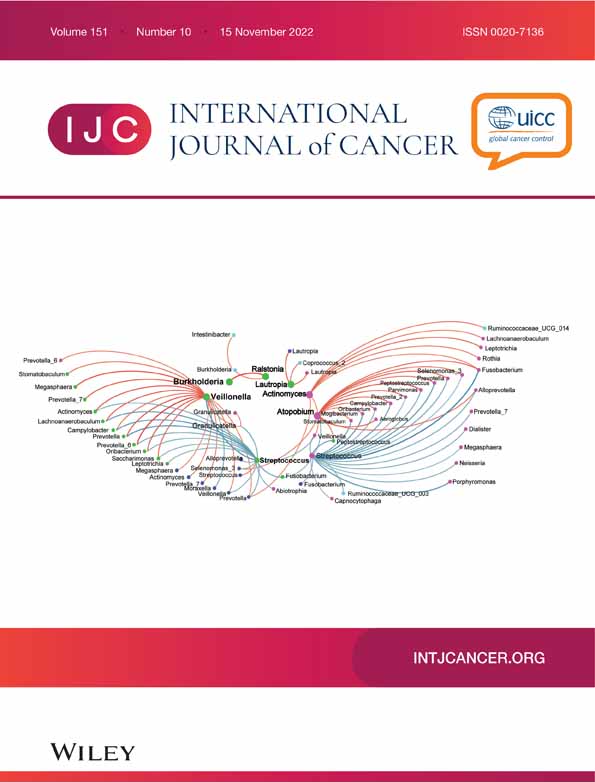
Alcohol consumption and risk of urothelial cell bladder cancer in the European prospective investigation into cancer and nutrition cohort

Findings on the association between alcohol consumption and bladder cancer are inconsistent. We investigated that association in the European Prospective Investigation into Cancer and Nutrition cohort. We included 476,160 individuals mostly aged 35–70 years, enrolled in ten countries and followed for 13.9 years on average. Hazard ratios (HR) for developing urothelial cell carcinoma (UCC; 1,802…

One-carbon metabolism nutrients and polygenic risk scores in relation to breast cancer risk: a nested case-control study within the European Prospective Investigation into Cancer and Nutrition (EPIC) cohort

Background One-carbon metabolism (1CM) regulates critical processes in carcinogenesis. However, the influence of 1CM-related nutritional and genetic factors on breast cancer (BC) risk remains unclear. Objectives This study aimed to assess the impact of 1CM-related nutrients and genetic variants with BC risk. Methods Case-control study nested within the European Prospective Investigation into Cancer and Nutrition…