










Datos - Registro de Cáncer de Granada

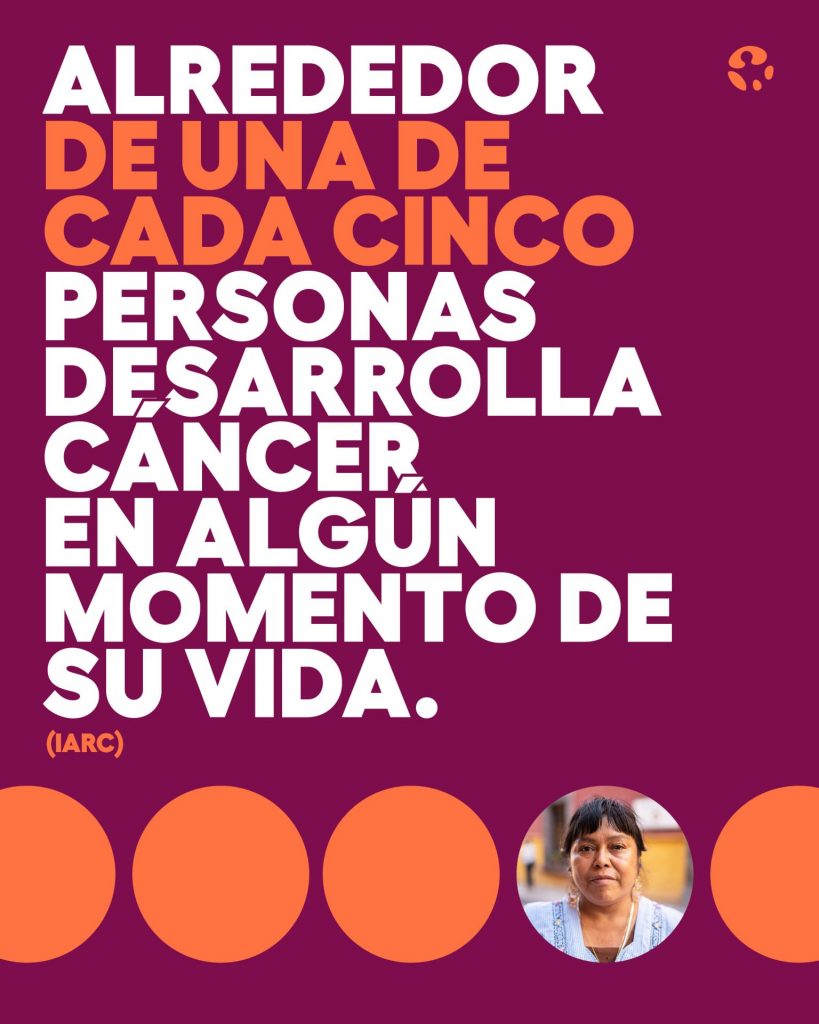
Campaña Día Mundial del Cáncer - 4 Febrero

Guías y otros recursos

Aulas de Cáncer. Escuela de Pacientes

Asociación Española Contra el Cáncer

Sociedad Española de Oncología Médica

Instituto de Investigación Biosanitaria de Granada

Estrategia del Cáncer de Andalucía

Estrategia de Vida Saludable en Andalucía

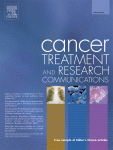
Artículos Científicos Cáncer

Nutrient adequacy and environmental foot-print of Mediterranean, pesco-, ovo-lacto-, and vegan menus: a modelling study

Background: Consumer food choices are changing towards a more plant-based diet (PBD) due to growing awareness of their less detrimental effects on health and the environment. However, PBDs—particularly vegan diets—may lead to nutritional deficiencies compared to non-PBDs. These differences may, in part, be influenced by the typically lower caloric content of PBDs. Objective: To compare…

Read more

What cancers are increasing in young adults: a population-based study of incidence trends in adults 20–49 years old in the South of Spain

Background Recent studies have documented sharp increases in the incidence of several types of cancer in young adults, highlighting the need to monitor and understand epidemiological trends in this population. The aim of this study was to analyze cancer incidence trends among young adults (20–49 years) in the province of Granada, Spain, from 1985 to…

Read more

Synergies between food biodiversity, processing levels, and the Eat-Lancet diet for nutrient adequacy and environmental sustainability: a multi-objective optimization using the EPIC cohort

Background Diets have become increasingly monotonous and high in ultra-processed foods (UPFs), contributing to poor health outcomes and environmental degradation. While sustainable diets, food biodiversity, and food processing levels have each been linked to nutritional and environmental outcomes, their combined impact has not been assessed. Objective To examine whether food biodiversity, intakes of UPFs, and…

Read more

Different diabetes types and pancreatic ductal adenocarcinoma: a Mendelian randomization and pathway/gene-set analysis

Background The associations between different types of diabetes, characterized by distinct pathophysiology and genetic architecture, and pancreatic ductal adenocarcinoma (PDAC) risk are not understood. Methods We investigated associations of genetic susceptibility to type 2 diabetes (T2D), 8 T2D mechanistic clusters, type 1 diabetes (T1D), and maturity-onset diabetes of the young (MODY) with PDAC risk. We…

Read more

Evaluation of the 4Kscore Test in Relation to Subsequent Risk of Aggressive Prostate Cancer in the European Prospective Investigation into Cancer and Nutrition

Background: PSA is central to referrals for prostate biopsy but has low specificity for aggressive prostate cancer. This study evaluates the 4Kscore (OPKO Diagnostics) versus total PSA in predicting short- and long-term risks of aggressive prostate cancer. Methods: Baseline blood samples from 1,658 men diagnosed with prostate cancer (median diagnosis time = 8.6 years) and…
Read more

Skin melanoma survival is improving in Europe but regional differences persist: Results of the EUROCARE-6 study

Background The aim of this study was to update previous EUROCARE survival estimates for skin melanoma (SM) monitoring trends and survival differences between European regions. Methods 1-year, 5-year, and 5-year/1-year conditional age-standardised relative survival (ASRS) and geographical comparisons were estimated on 280,498 patients participating in the EUROCARE-6 project (>=15 years old) with invasive SM (diagnosed…

Read more

Lifestyle changes and postmenopausal breast cancer risk in women from the European Prospective Investigation into Cancer and Nutrition

Background The risk of breast cancer has been associated with various lifestyle factors, yet the evidence regarding how lifestyle modifications affect this risk remains limited. This study examines the relationship between changes in the Healthy Lifestyle Index (HLI) and postmenopausal breast cancer risk in women participating in the European Prospective Investigation into Cancer (EPIC). Methods…

Read more

Addressing common biases in the evaluation of lifetime alcohol consumption patterns and dementia risk: the EPIC-Spain dementia cohort

Background: Alcohol consumption has been described to exhibit a J-shaped relationship with dementia risk, but previous observations may be partly biased due to “sick-quitters” and competing risks of death. Objective: To examine the association between baseline and lifetime alcohol consumption and the risk of dementia and subtypes in a large Mediterranean cohort, accounting for lifetime…

Read more

Global variation in patterns of care and time to initial treatment for breast, cervical, and ovarian cancer from 2015 to 2018 (VENUSCANCER): a secondary analysis of individual records for 275 792 women from 103 population-based cancer registries in 39 countries and territories

Background Cancers of the breast, cervix, and ovary are a major public health problem worldwide. Evaluating the consistency with clinical guidelines for treatment by use of individual high-resolution data from population-based cancer registries is a powerful tool to help interpretation of global inequalities in cancer survival. The VENUSCANCER project aims to assess the worldwide variation…

Read more

Biomarkers for Personalised Primary or Secondary Prevention in Cardiovascular Diseases: A Rapid Scoping Review

Cardiovascular diseases (CVDs) are the leading cause of morbidity and mortality globally. Early detection and personalised prevention strategies are crucial for reducing the burden of CVD. The use of biomarkers plays a pivotal role in identifying individuals at risk and facilitating timely interventions. This rapid scoping review aims to identify and evaluate current research on…

Read more

Factors influencing the diagnostic basis in pancreatic cancer. A study within the European Prospective Investigation into Cancer and Nutrition (EPIC) cohort

Background and aims Substantial differences have been reported in risk estimates for etiologic factors of pancreatic cancer among subjects with different degrees of diagnostic certainty. The aim of the study was to assess the influence of some personal and social characteristics on the diagnostic basis in individuals with pancreatic cancer. Methods We analyzed 393 participants…

Read more

Intake of total, classes, and subclasses of (poly)phenols and risk of lymphoid neoplasms: a prospective analysis in the EPIC cohort

Background Existing epidemiological evidence regarding the potential role of (poly)phenol intake in lymphoma development is limited. Methods We investigated the associations between the intake of total and individual classes and subclasses of (poly)phenols and the risk of lymphoma, including main frequent subtypes in the EPIC cohort using multivariable-adjusted Cox proportional hazards models. Results During a…

Read more

Survival trends and cure rates of hematological neoplasms in the Spanish pediatric population

Hematological neoplasms (HN) were the first cause of death in children aged 5–9 years in Spain. The aim of this registry-based study is to provide a detailed overview of the survival of HN in the Spanish pediatric population. All pediatric HN cases included were classified according to the International Classification for Childhood Cancer. Flexible parametric…

Read more

Quantifying the environmental and food biodiversity impacts of ultra-processed foods: evidence from the European Prospective Investigation into Cancer and Nutrition (EPIC) study

Objective:While associations of ultra-processed food (UPF) consumption with adverse health outcomes are accruing, its environmental and food biodiversity impacts remain underexplored. This study examines associations between UPF consumption and dietary greenhouse gas emissions (GHGe), land use and food biodiversity. Design:Prospective cohort study. Linear mixed models estimated associations between UPF intake (g/d and kcal/d) and GHGe…

Read more

Development of a blood-based lipidomic fat quality score for the risk of ischemic stroke

Introduction: Poor-quality diets promote ischemic stroke. Red blood cell fatty acids (RBC-FAs) are objective, long-term biomarkers of diet. In a case-control study nested in the European Prospective Investigation into Cancer and Nutrition (EPIC)-Spain, we developed a blood-based lipidomic fat quality (LFQ) score considering pre-defined RBC-FA diet-related biomarkers, and examined whether LFQ score relates to the…

Read more

Plant-based dietary patterns and age-specific risk of multimorbidity of cancer and cardiometabolic diseases: a prospective analysis

Background It is currently unknown whether plant-based dietary patterns influence disease progression to multimorbidity after an initial non-communicable disease, and whether the associated risk of multimorbidity varies with age. This study aimed to investigate associations of plant-based diets with the risk of multimorbidity, defined as the co-occurrence of at least two chronic diseases in an…

Read more

Biodiverse diets present co-benefits for greenhouse gas emissions, land use, mortality rates and nutritional adequacy in Europe

Dietary diversity is vital for public health nutrition, yet the co-benefits of increasing dietary species richness (DSR) on human and environmental health remain unassessed. Here we explore associations between DSR and greenhouse gas emissions, land use, nutrient adequacy and mortality rates among European Investigation into Cancer and Nutrition (EPIC) study participants. Total DSR was positively…

Read more

Thyroid hormones and epithelial ovarian cancer risk and survival: results from the European Prospective Investigation into Cancer and Nutrition study

Background Thyroid-stimulating hormone (TSH) and thyroid hormones (free triiodothyronine [fT3] and free thyroxine [fT4]) may influence cancer outcomes, but evidence for ovarian cancer is limited. Methods We conducted a nested case–control study comparing 578 epithelial ovarian cancer (EOC) cases with matched controls within the European Prospective Investigation into Cancer and Nutrition (EPIC). To examine associations…

Read more

Young Men’s Communication Needs for the Human Papillomavirus (HPV) Vaccine: A Cross-Cultural, Qualitative Analysis in Scotland, Spain, and the USA

Background Globally, human papillomavirus (HPV) vaccine uptake rates have declined within a wider context of vaccine hesitancy. Gender-neutral vaccine programmes are increasing and recommended for the prevention of cervical, anogenital, and oropharyngeal cancers affecting both women and men. To address the problem of suboptimal HPV uptake rates for boys and men, we aimed to understand…

Read more

Body mass index and breast cancer risk among postmenopausal women with and without cardiometabolic diseases: Findings from two prospective cohort studies in Europe

Background Adiposity, measured by body mass index (BMI), is a known risk factor for postmenopausal breast cancer. However, whether the association of BMI with breast cancer risk differs among women with and without cardiovascular diseases (CVDs) or type 2 diabetes (T2D) is uncertain. Methods This study used individual participant data from the European Prospective Investigation…

Read more

Association Between Dietary Intake and Blood Concentrations of One-Carbon-Metabolism-Related Nutrients in European Prospective Investigation into Cancer and Nutrition

Background/Objectives: We examined the association between dietary intake and blood concentrations of one-carbon metabolism (OCM)-related nutrients in the European Prospective Investigation into Cancer and Nutrition (EPIC). Methods: Blood concentrations and dietary intake of the vitamins riboflavin (B2), Pyridoxal 5′-phosphate (PLP and B6), folate (B9), B12, and methionine, concentrations of homocysteine, and dietary intake of betaine,…

Read more

Risk of a second primary cancer after breast cancer in Southern Spain: a population-based study over 3 decades

Abstract Objective To estimate the risk of developing a second primary cancer (SPC) among women diagnosed with breast cancer in Granada, Spain. Study design This population-based observational cohort study utilized data from the Granada Cancer Registry. We included all women aged 15 and above diagnosed with malignant breast cancer from 1985 to 2019. Main outcome…

Read more

Can serum metabolic signatures inform on the relationship between healthy lifestyle and colon cancer risk?

Background Colon cancer is strongly influenced by lifestyle factors. Sociodemographic factors like sex and socioeconomic position (SEP) might modulate the relationship between lifestyle and colon cancer risk. Metabolomics offers potential to uncover biological mechanisms linking lifestyle and colon cancer. Methods Lifestyle and untargeted metabolomic data were available from a nested case–control study within the European…

Read more

Metabolic profile of biodiverse diets in a healthy European cohort

Background There is increasing evidence that diets characterized by food biodiversity could contribute to health outcomes. Greater dietary species diversity has been linked to reduced gastrointestinal cancer risk and all-cause mortality. However, mechanistic pathways supporting the association between food biodiversity and health are just beginning to be explored. Aim To characterize the metabolic profile associated…

Read more