Boletines serie infografías cáncer
Background Metabolomics is a valuable tool for characterising biological mechanisms involved in cancer development, but produces complex datasets with intricate interdependencies. While linear dimension reduction techniques such as principal component analysis (PCA), have proven useful to summarise informative hidden patterns, biological evidence suggests metabolic relationships extend beyond linearity. Non-linear dimension reduction techniques, such as autoencoders…
Background: Although there is evidence that Fusobacterium spp. in colon tissue is associated with prognosis, less is known about the association between antibody response to antigens expressed by fusobacteria and colorectal cancer–specific mortality. Methods: Antibody responses to 11 Fusobacterium nucleatum (ATCC 25586) antigens were measured in prediagnostic blood for 471 incident colorectal cancer cases (median…
Background Mammography screening programmes have been widely implemented across European countries over the past 40 years with the main aim to detect breast cancer earlier and thereby reduce breast cancer mortality. This study aimed to analyse and compare changes over time in breast cancer incidence, by stage at diagnosis, and breast cancer mortality across countries…
Background Limited evidence exists for effect modification of genetic characteristics on the associations of food consumption and incident type 2 diabetes (T2D). Objectives We aimed to investigate whether the food-T2D association would vary by genetic susceptibility to metabolic traits. Methods We analyzed data from 9542 incident T2D cases and a subcohort of 12,477 participants nested…
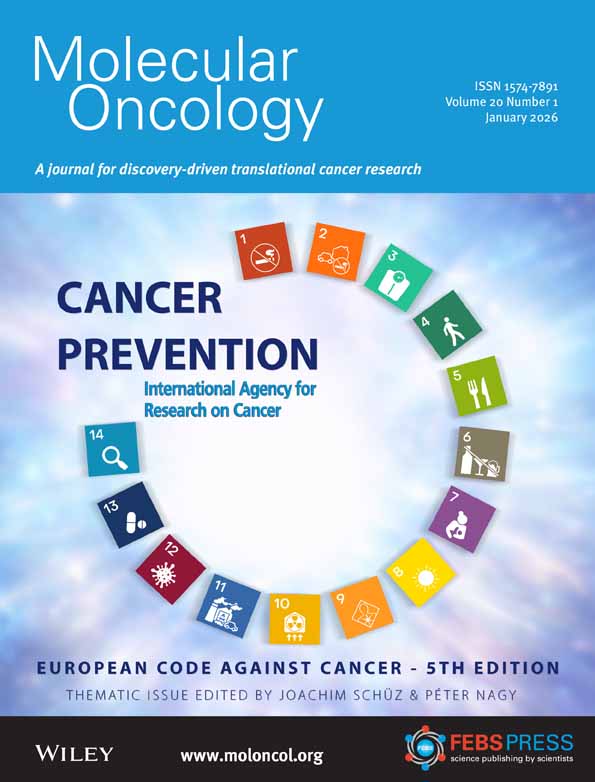
Although cancer is a leading cause of death in the European Union, around 40% of cases are preventable. The European Code Against Cancer (ECAC) was developed to inform citizens about key cancer-risk-reducing actions. This study aimed to identify effective ways to present the 5th edition of the code (ECAC5) to optimise awareness of cancer risks…
Background Diet may modify colorectal cancer risk. We investigated the associations of three dietary patterns, ultra-processed food (UPF) consumption, healthy plant-based food consumption, and food biodiversity, separately and combined into a “3V” score with risk of colorectal cancer. Methods This study used data from the prospective European Prospective Investigation into Cancer and Nutrition (EPIC) cohort,…
Neurodegenerative diseases represent a major public health challenge due to their high prevalence and poor prognosis. Identifying biomarkers to stratify individuals by their risk of developing these diseases may help to define new personalized prevention interventions. The objective of this study was to conduct a scoping review of biomarkers for primary and secondary personalized prevention…
This systematic review of prospective studies examined whether psychological stress—conceptualised as cumulative stressful life events or perceived stress—is associated with cancer incidence. It was pre-registered in PROSPERO (IDCRD42020175681) and conducted following PRISMA guidelines. Methodological quality was assessed using the NIH Tool for Observational Studies, and the certainty of evidence was assessed using the GRADE tool.…
Background: Consumer food choices are changing towards a more plant-based diet (PBD) due to growing awareness of their less detrimental effects on health and the environment. However, PBDs—particularly vegan diets—may lead to nutritional deficiencies compared to non-PBDs. These differences may, in part, be influenced by the typically lower caloric content of PBDs. Objective: To compare…
Background Recent studies have documented sharp increases in the incidence of several types of cancer in young adults, highlighting the need to monitor and understand epidemiological trends in this population. The aim of this study was to analyze cancer incidence trends among young adults (20–49 years) in the province of Granada, Spain, from 1985 to…