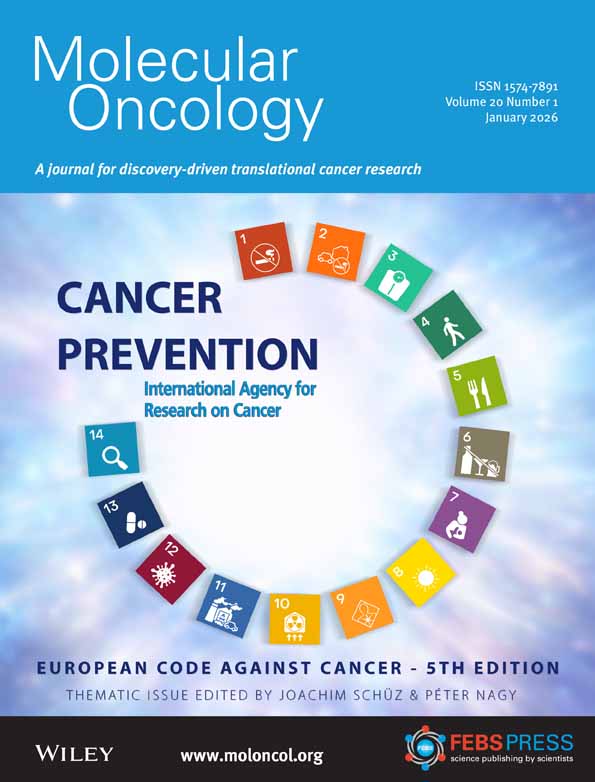



Optimising the European Code Against Cancer, 5th edition, to increase awareness of avoidable cancer risks in all socioeconomic groups

Although cancer is a leading cause of death in the European Union, around 40% of cases are preventable. The European Code Against Cancer (ECAC) was developed to inform citizens about key cancer-risk-reducing actions. This study aimed to identify effective ways to present the 5th edition of the code (ECAC5) to optimise awareness of cancer risks…

The 3V score and joint associations of low ultra-processed food, biodiverse and plant-based diets on colorectal cancer risk: results from the European Prospective Investigation into Cancer and Nutrition (EPIC) study

Background Diet may modify colorectal cancer risk. We investigated the associations of three dietary patterns, ultra-processed food (UPF) consumption, healthy plant-based food consumption, and food biodiversity, separately and combined into a “3V” score with risk of colorectal cancer. Methods This study used data from the prospective European Prospective Investigation into Cancer and Nutrition (EPIC) cohort,…

Personalized prevention of neurodegenerative diseases: scoping review and evidence gap map

Neurodegenerative diseases represent a major public health challenge due to their high prevalence and poor prognosis. Identifying biomarkers to stratify individuals by their risk of developing these diseases may help to define new personalized prevention interventions. The objective of this study was to conduct a scoping review of biomarkers for primary and secondary personalized prevention…

The euthanasia law from the perspective of healthcare professionals in Spain

Background In 2021, Spain passed Organic Law 3/2021, which regulates euthanasia and represents an extension of rights to make decisions in the context of health care. According to the Law, the state must guarantee access to Medical Assistance in Dying (MAiD) through health services. Therefore, the involvement of health professionals is crucial. The aim of…

The relationship between psychological stress and cancer incidence: a systematic review and meta-analysis

This systematic review of prospective studies examined whether psychological stress—conceptualised as cumulative stressful life events or perceived stress—is associated with cancer incidence. It was pre-registered in PROSPERO (IDCRD42020175681) and conducted following PRISMA guidelines. Methodological quality was assessed using the NIH Tool for Observational Studies, and the certainty of evidence was assessed using the GRADE tool.…

Cost-Utility Analysis of Left Bundle Branch Area Versus Biventricular Pacing for Cardiac Resynchronization Therapy: A Multicenter, Prospective, Quasi-Experimental Study

Introduction Cardiac resynchronization therapy (CRT) is a well-established treatment for patients with heart failure (HF). Recently, left bundle branch area pacing (LBBAP) has emerged as a more physiological alternative to biventricular pacing (BVP) for CRT. This study aimed to evaluate the cost-utility of LBBAP CRT compared with BVP CRT. Methods A cost-utility, non-randomized, prospective, multicenter,…

Cellular and Molecular Mechanisms of Micro- and Nanoplastics Driving Adverse Human Health Effects

Micro- and nanoplastics (MNPs) are increasingly recognized as emerging contaminants of concern for human health. Their small size, diverse composition, and reactive surface enable interactions with biological barriers and cellular systems. This comprehensive narrative review synthesizes and critically evaluates current evidence on the mechanistic effects of MNPs in humans and experimental models. Systemic mechanisms, including…

What cancers are increasing in young adults: a population-based study of incidence trends in adults 20–49 years old in the South of Spain

Background Recent studies have documented sharp increases in the incidence of several types of cancer in young adults, highlighting the need to monitor and understand epidemiological trends in this population. The aim of this study was to analyze cancer incidence trends among young adults (20–49 years) in the province of Granada, Spain, from 1985 to…

Synergies between food biodiversity, processing levels, and the Eat-Lancet diet for nutrient adequacy and environmental sustainability: a multi-objective optimization using the EPIC cohort

Background Diets have become increasingly monotonous and high in ultra-processed foods (UPFs), contributing to poor health outcomes and environmental degradation. While sustainable diets, food biodiversity, and food processing levels have each been linked to nutritional and environmental outcomes, their combined impact has not been assessed. Objective To examine whether food biodiversity, intakes of UPFs, and…

Different diabetes types and pancreatic ductal adenocarcinoma: a Mendelian randomization and pathway/gene-set analysis

Background The associations between different types of diabetes, characterized by distinct pathophysiology and genetic architecture, and pancreatic ductal adenocarcinoma (PDAC) risk are not understood. Methods We investigated associations of genetic susceptibility to type 2 diabetes (T2D), 8 T2D mechanistic clusters, type 1 diabetes (T1D), and maturity-onset diabetes of the young (MODY) with PDAC risk. We…