

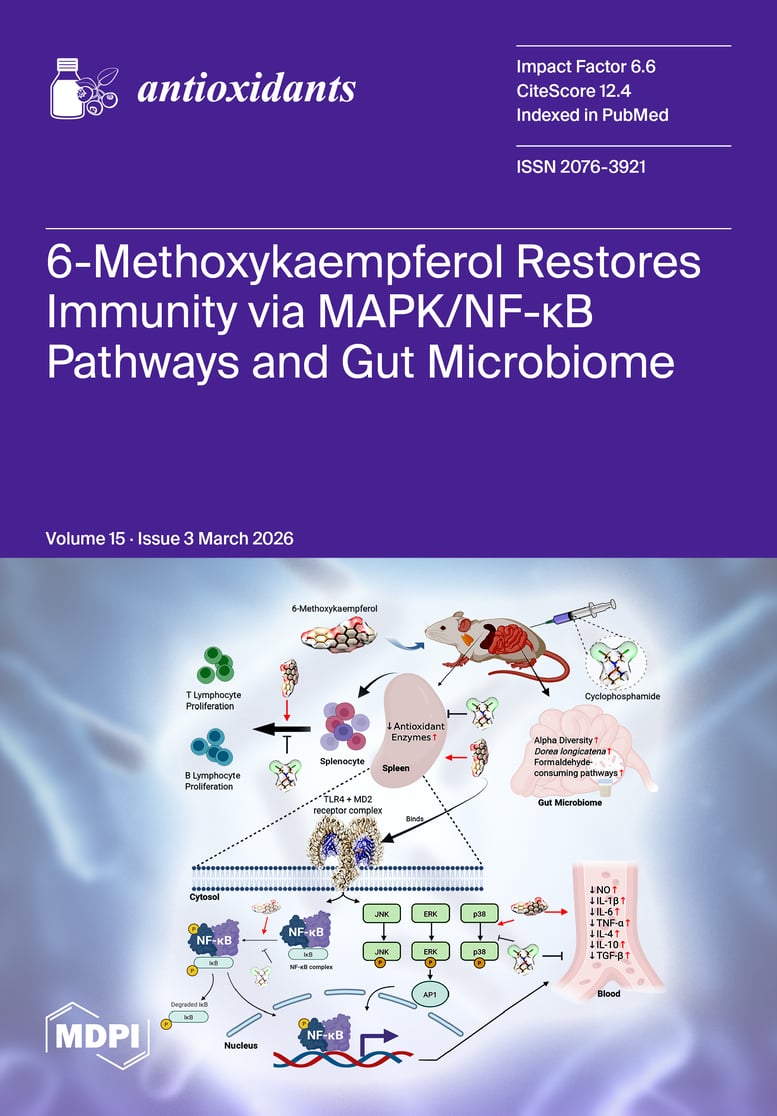
Intake of the Total, Classes, and Subclasses of (Poly)Phenols and Risk of Prostate Cancer: A Prospective Analysis of the EPIC Study

Existing epidemiological evidence regarding the potential role of (poly)phenol intake in prostate cancer (PCa) risk is scarce and, in the case of flavonoids, it has been suggested that their intake may increase PCa risk. We investigated the associations between the intake of the total and individual classes and subclasses of (poly)phenols and the risk of…
Intake of the Total, Classes, and Subclasses of (Poly)phenols and Breast Cancer Risk: A Prospective Analysis of the EPIC Study

Polyphenols represent the largest and most diverse class of dietary antioxidants. Epidemiological evidence linking specific (poly)phenol classes, such as flavonoids and lignans, to breast cancer (BC) risk remains limited and largely inconclusive in prospective studies. The aim of this study is to examine the association between the intake of total (poly)phenols—and its classes and subclasses—and…

Intake of Individual Fatty Acids and Risk of Prostate Cancer in the European Prospective Investigation into Cancer and Nutrition

The associations of individual dietary fatty acids with prostate cancer risk have not been examined comprehensively. We examined the prospective association of individual dietary fatty acids with prostate cancer risk overall, by tumor subtypes, and prostate cancer death. 142,239 men from the European Prospective Investigation into Cancer and Nutrition who were free from cancer at…

Informe Salud y Género 2025

Informe Salud y Género en Andalucía Edita: Consejería de Salud y Consumo Responsable de edición: Dirección General de Salud Pública y Ordenación Farmacéutica Elabora: Escuela Andaluza de Salud Pública. Junta de Andalucía | Febrero, 2025 Coordinación General: Teresa Campos García Servicio de Coordinación de la Dirección General de Salud Pública y Ordenación Farmacéutica. Consejería de…

Informe I Jornada sobre avances en cáncer de pulmón EASP

El 11 de mayo de 2017 se celebró en Granada, en la sede de la Escuela Andaluza de Salud Pública (EASP), la Primera Jornada sobre avances en cáncer de pulmón, dirigida a profesionales de Neumología, Cirugía Torácica, Anatomía Patológica, Oncología, Genética, Radiología, Farmacia Hospitalaria, Atención Primaria, etc., además de profesionales y gestores directivos de Andalucía.…

Informe de Salud y Género 2022

DESCARGA INFORME PDFPÁGINA WEB Propuesta de citación de la publicación: López Rodríguez Rosa Mª, Soriano Villarroel Isabel, Coord. Informe Salud y Género 2022: aproximación multidisciplinar a la pandemia por COVID-19. Madrid: Ministerio de Sanidad; 2022 Dirección General de Salud Pública: Pilar Aparicio Azcárraga. Directora General Coordinación del Informe: Rosa Mª López Rodríguez. Directora de Programas…

Influenza Vaccination Uptake and Associated Factors among Individuals with Diabetes Mellitus in Spain: A Cross-Sectional Study Using Data from the European Health Interview Survey 2020

Background: Vaccination against influenza has proven to reduce influenza-caused hospital entries, treatment times in intensive care units and hospitalisation costs for treating people with Diabetes Mellitus (DM). Despite the existing influenza vaccination recommendations for all persons with DM, in Spain, vaccination hesitancy remains substantial, and vaccination rates lag behind target. We aimed to assess predictors…

Influencia del código postal en las hospitalizaciones pediátricas en Sevilla

Introducción El lugar de vivienda es un indicador del nivel socioeconómico que influye en la morbimortalidad y utilización de recursos sanitarios. Los objetivos de este estudio fueron analizar este efecto en las hospitalizaciones pediátricas y describir las tasas de hospitalización de los diagnósticos principales más frecuentes en la ciudad de Sevilla. Material y métodos Estudio…

Influencia de la temperatura ambiental y contaminación en la transmisión del SARS-COV-2

La transmisión del SARS-CoV-2 es un problema de Salud Pública de máxima importancia que está influido por diversos factores. Recientemente se ha planteado la hipótesis de que esta transmisión puede reducirse durante el verano debido a la temperatura cálida. Por otro lado, se está estudiando la posible relación entre el elevado número de contagios de…