

Evaluation of the psychometric performance of the Spanish and Catalan versions of the patient reported experiences and Outcomes of Safety in Primary Care (PREOS-PC)-Compact questionnaire

Abstract Background Patients provide a unique, irreplaceable, and essential perspective in evaluating patient safety. The suite of Patient Reported Experiences and Outcomes of Safety in Primary Care (PREOS-PC) tools are a notable exception to the scarcity of patient-reported patient safety measures. Full evaluation of their performance has only been attempted for the English version, thereby…

Evaluation of the COVID-19 response in Spain: principles and requirements

Although we received widespread support from more than 50 scientific societies and associations representing public health, medical, and nursing professional communities; there is now a need to define such an evaluation in terms of its timing, scope, and leadership. Here, we suggest three major requisites and four guiding principles, adapted from McKee and colleagues, which…

Evaluation of the Biases in the Studies that Assess the Effects of the Great Recession on Health. A Systematic Review

Background: Our main objective was to evaluate the fundamental biases detected in studies assessing the effects the Great Recession had on health for the case of Spain. As secondary objectives we presented methods to control these biases and to discuss the results of the studies in question if they had controlled for them. Methods: We…

Evaluation of the 4Kscore Test in Relation to Subsequent Risk of Aggressive Prostate Cancer in the European Prospective Investigation into Cancer and Nutrition

Background: PSA is central to referrals for prostate biopsy but has low specificity for aggressive prostate cancer. This study evaluates the 4Kscore (OPKO Diagnostics) versus total PSA in predicting short- and long-term risks of aggressive prostate cancer. Methods: Baseline blood samples from 1,658 men diagnosed with prostate cancer (median diagnosis time = 8.6 years) and…

Evaluation of protein and amino acid intake estimates from the EPIC dietary questionnaires and 24-h dietary recalls using different food composition databases

Background and aims This study aimed to expand the European Prospective Investigation into Cancer and Nutrition (EPIC) nutrient database (ENDB) by adding amino acid (AA) values, using the U.S. nutrient database (USNDB). Additionally, we aimed to evaluate these new protein and AA intake estimates from the EPIC dietary questionnaires (DQ) and 24-h dietary recalls (24-HDR) using…

Evaluation of conventional and non-conventional biomarkers of liver toxicity in greenhouse workers occupationally exposed to pesticides

The liver plays a prominent role in maintenance of homeostasis and is the major organ for xenobiotic metabolism, including pesticides. Conventional liver function tests are widely used to assess hepatocellular and biliary system dysfunction by measuring serum levels of aminotransferases (ALT, AST) and cholestasis enzymes (alkaline phosphatase –ALP– and γ-glutamyl transferase –GGT–), respectively. Although these…

Evaluating SinergiAPS, an intervention based on patient feedback to improve patient safety in primary care: a cluster randomized trial

Background Patient safety, defined by the WHO as the absence of preventable harm, is a critical component of healthcare quality and poses a significant challenge globally. This study aimed to evaluate the effectiveness of SinergiAPS, a patient-centred audit and feedback intervention, in improving patient safety in primary healthcare (PHC) centres. Methods We conducted a 12-month…

Evaluación Impacto de la Salud

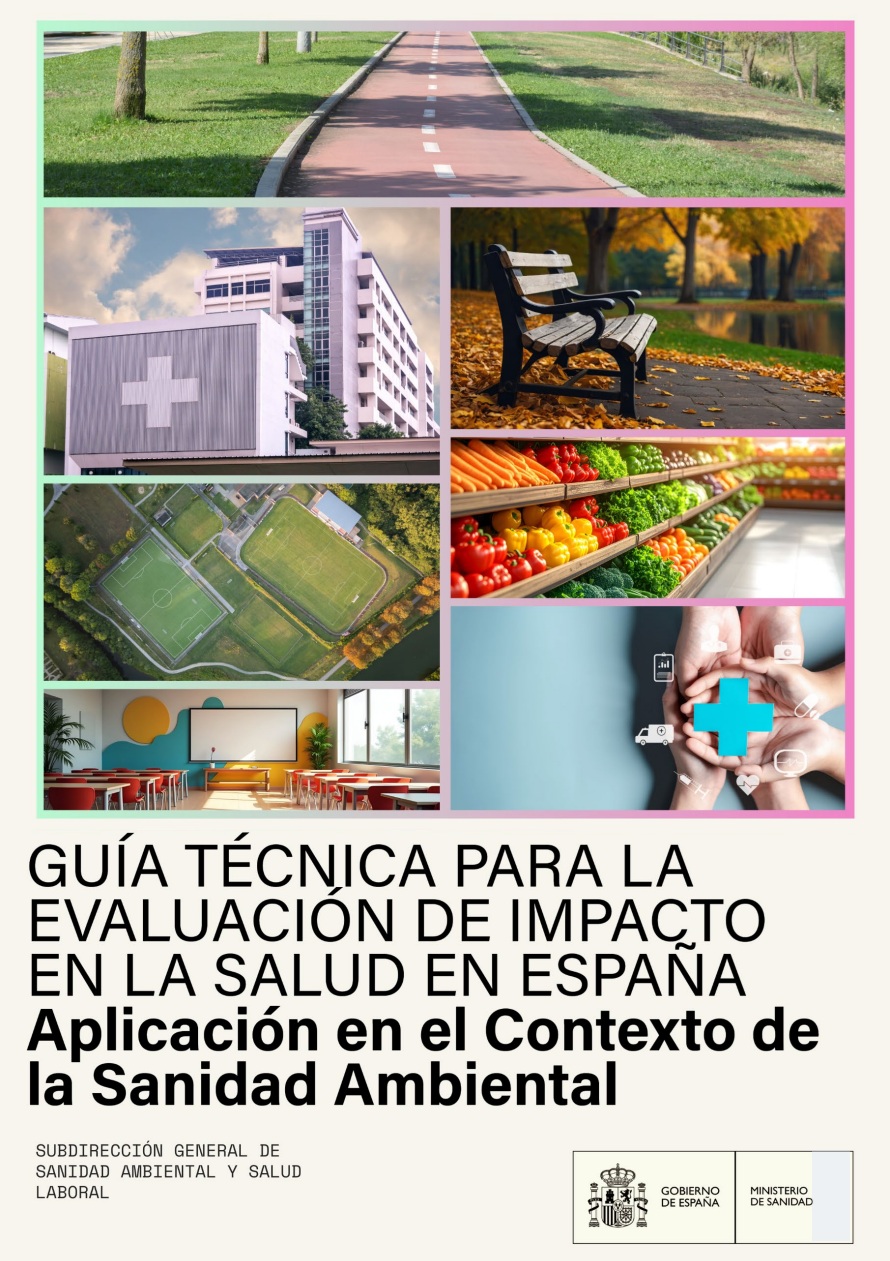
Guía Técnica para la Evaluación del Impacto en la Salud en España Aplicación en el contexto de la Sanidad Ambiental COORDINACIÓN Ministerio de Sanidad, Subdirección General de Sanidad Ambiental y Salud Laboral: Margarita Palau Miguel, Marian Mendoza García, Francisco Vargas Marcos AUTORES Ministerio de Sanidad, Subdirección General de Sanidad Ambiental y Salud Laboral: Rosina Magdalena…

Evaluación externa y acreditación de servicios sanitarios

Seminario de 2000 La calidad es considerada hoy una variable estratégica por la mayoría de empresas, instituciones públicas y organizaciones en general. Los servicios públicos de salud y sus profesionales tienen además una responsabilidad que va más allá de las cuestiones económicas: por la naturaleza misma del tipo de servicio que prestan y por el carácter público de los…