

Mediating role of lifestyle behaviours in the association between education and cancer: results from the European Prospective Investigation into Cancer and Nutrition

Background: Many studies have shown that socioeconomic position (SEP) is associated with the incidence of malignant tumors at different sites. This study aims to estimate the association between educational level (as proxy for SEP) and cancer incidence and to understand if the observed associations might be partially explained by lifestyle behaviors. Methods: The analyses were…

Mediating effect of soluble B-cell activation immune markers on the association between anthropometric and lifestyle factors and lymphoma development

Sustained B-cell activation is an important mechanism contributing to B-cell lymphoma (BCL). We aimed to validate four previously reported B-cell activation markers predictive of BCL risk (sCD23, sCD27, sCD30, and CXCL13) and to examine their possible mediating effects on the association between anthropometric and lifestyle factors and major BCL subtypes. Pre-diagnostic serum levels were measured…

Mechanisms Considering Public Investment in Pricing and Reimbursement Decisions of Medicines and Other Health Technologies: A Scoping Review

Background Pricing and reimbursement (P&R) systems do not normally use public investments in research and development (R&D) as criteria when negotiating the prices and reimbursement of health technologies. Objective The objective was to find mechanisms that consider public investment in R&D when negotiating P&R or obtaining a fair return on this public investment Methods We…

Mecanismo de acción de la anticoncepción de urgencia con levonorgestrel: ¿cuál es la evidencia?

Carta al director de la profesora de la EASP, María del Mar García Calvente sobre los efectos del levonorgestrel en la anticoncepción de emergencia Sr. Director: Agradecemos el interés mostrado por Alegre del Rey et al. por nuestro editorial Anticoncepción de urgencia y objeción de conciencia: un debate sin cerrar1. Afirman estos autores que existe…

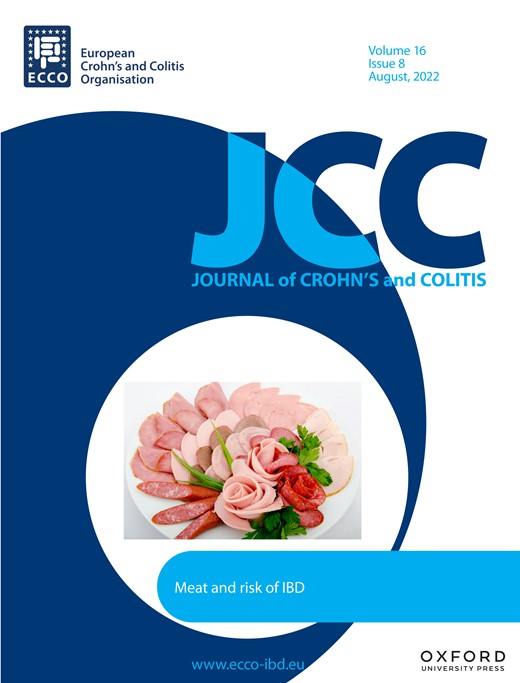
Meat Intake Is Associated with a Higher Risk of Ulcerative Colitis in a Large European Prospective Cohort Studyø

Abstract Background and Aims We aimed to investigate the association between protein intake and risk of inflammatory bowel disease [IBD] in the European Prospective Investigation into Cancer and Nutrition. Methods A total of 413 593 participants from eight European countries were included. Dietary data were collected at baseline from validated food frequency questionnaires. Dietary data…

Meat intake is associated with a higher risk of ulcerative colitis in a large European prospective cohort study

BACKGROUND AND AIMS We aimed to investigate the association between protein intake and risk of inflammatory bowel disease (IBD) in the European Prospective Investigation into Cancer and Nutrition. METHODS 413 593 participants from eight European countries were included. Dietary data were collected at baseline from validated food frequency questionnaires. Dietary data were calibrated to correct…

Meat Intake and Risk of Gastric and Esophageal Adenocarcinoma in the European Prospective Investigation Into Cancer and Nutrition (EPIC) Study

Whether meat consumption increases the risk of gastric cancer (GC) and esophageal cancer or not remains unclear. Moreover, the number of prospective studies evaluating the associations by anatomical and histological types of GC is limited. We aimed to assess the associations of red, processed, and white meat with all gastric adenocarcinomas by anatomical site and…

Measuring the impact of informal elderly caregiving: a systematic review of tools

Purpose To classify and identify the main characteristics of the tools used in practice to assess the impact of elderly caregiving on the informal carers’ life. Methods A systematic review of literature was performed searching in Embase, MEDLINE, PsycINFO, CINAHL, IBECS, LILACS, SiiS, SSCI and Cochrane Library from 2009 to 2013 in English, Spanish, Portuguese…

Measuring feelings about choices and risks: The Berlin Emotional Responses to Risk Instrument (BERRI)

We introduce a brief instrument specifically validated for measuring positive and negative feelings about risks—the Berlin Emotional Responses to Risk Instrument (BERRI). Based on seven studies involving diverse adults from three countries (n = 2120), the BERRI was found to robustly estimate anticipatory affective reactions derived from subjective evaluations of positive (i.e., assured, hopeful, and relieved) and…

Meal patterns across ten European countries – results from the European Prospective Investigation into Cancer and Nutrition (EPIC) calibration study

To characterize meal patterns across ten European countries participating in the European Prospective Investigation into Cancer and Nutrition (EPIC) calibration study. Cross-sectional study utilizing dietary data collected through a standardized 24 h diet recall during 1995–2000. Eleven predefined intake occasions across a 24 h period were assessed during the interview. In the present descriptive report,…