

Metabolic profile of biodiverse diets in a healthy European cohort

Background There is increasing evidence that diets characterized by food biodiversity could contribute to health outcomes. Greater dietary species diversity has been linked to reduced gastrointestinal cancer risk and all-cause mortality. However, mechanistic pathways supporting the association between food biodiversity and health are just beginning to be explored. Aim To characterize the metabolic profile associated…
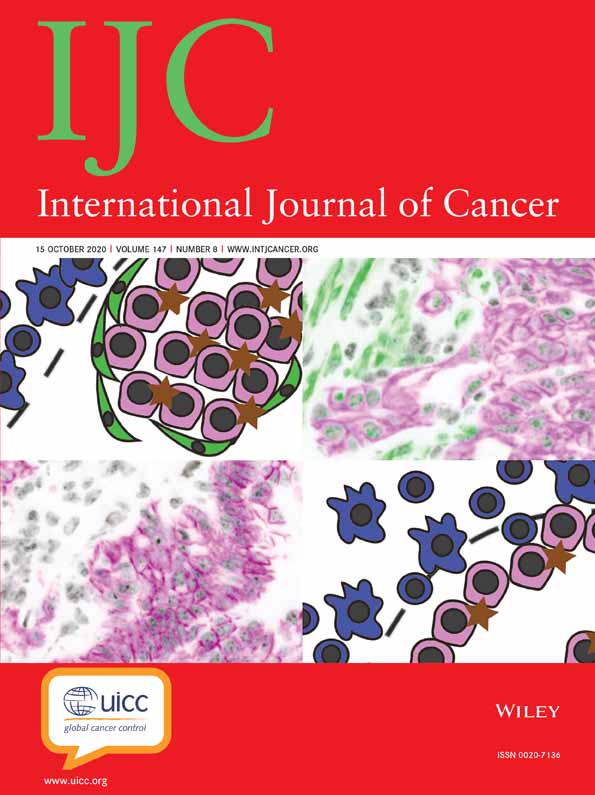

Metabolic perturbations prior to hepatocellular carcinoma diagnosis: Findings from a prospective observational cohort study

Hepatocellular carcinoma (HCC) development entails changes in liver metabolism. Current knowledge on metabolic perturbations in HCC is derived mostly from case‐control designs, with sparse information from prospective cohorts. Our objective was to apply comprehensive metabolite profiling to detect metabolites whose serum concentrations are associated with HCC development, using biological samples from within the prospective European…

Menstrual factors, reproductive history, hormone use, and Urothelial carcinoma risk: A prospective study in the EPIC cohort

Background: Urothelial carcinoma (UC) is the predominant (95%) bladder cancer subtype in industrialised nations. Animal and epidemiological human studies suggest that hormonal factors may influence UC risk. Methods: We used an analytic cohort of 333 919 women from the European Prospective Investigation into Cancer and Nutrition Cohort (EPIC). Associations between hormonal factors and incident UC…

Mediterranean diet and risk of pancreatic cancer in the European Prospective Investigation into Cancer and Nutrition cohort

Background: The Mediterranean diet (MD) has been proposed as a means for cancer prevention, but little evidence has been accrued regarding its potential to prevent pancreatic cancer. We investigated the association between the adherence to the MD and pancreatic cancer risk within the European Prospective Investigation into Cancer and Nutrition (EPIC) cohort. Methods: Over half…

Medios de comunicación y trasplante de órganos

En este libro de 1997 se hablaba de los trasplantes de órganos como una terapéutica bien consolidada de elección para pacientes con insuficiencia renal, cardíaca, hepática, pulmonar, etc. Los trasplantes tienen una característica singular: precisan del concurso indispensable de la población con sus donaciones de órganos. Los trasplantes plantean un triángulo cuidadano-donante, aparato sanitario, enfermo receptor. Además la comunicación…

Medicina basada en las «existencias» o soporte ético para las decisiones difíciles

La pandemia por coronavirus está provocando una crisis de salud pública mundial sobre la que aún desconocemos gran parte de sus manifestaciones clínicas, comportamiento epidemiológico y abordaje terapéutico. También sus consecuencias de tipo social y económico son impredecibles a medio y largo plazo. España está siendo uno de los países más afectados, tanto en incidencia…

Mediational Occupational Risk Factors Pertaining to Work Ability According to Age, Gender and Professional Job Type

The predictive value of work ability for several health and occupational outcomes is well known. Maintaining the ability to work of all employees has become an important topic in research although some evidence suggests that some groups of workers need greater attention than others. Healthcare workers (x¯ = 54.46 ± 5.64 years) attending routine occupational…

Mediation analysis of the alcohol‐postmenopausal breast cancer relationship by sex hormones in the EPIC Cohort

Alcohol consumption is associated with higher risk of breast cancer (BC); however, the biological mechanisms underlying this association are not fully elucidated, particularly the extent to which this relationship is mediated by sex hormone levels. Circulating concentrations of estradiol, testosterone, their free fractions and sex‐hormone binding globulin (SHBG), were examined in 430 incident BC cases…