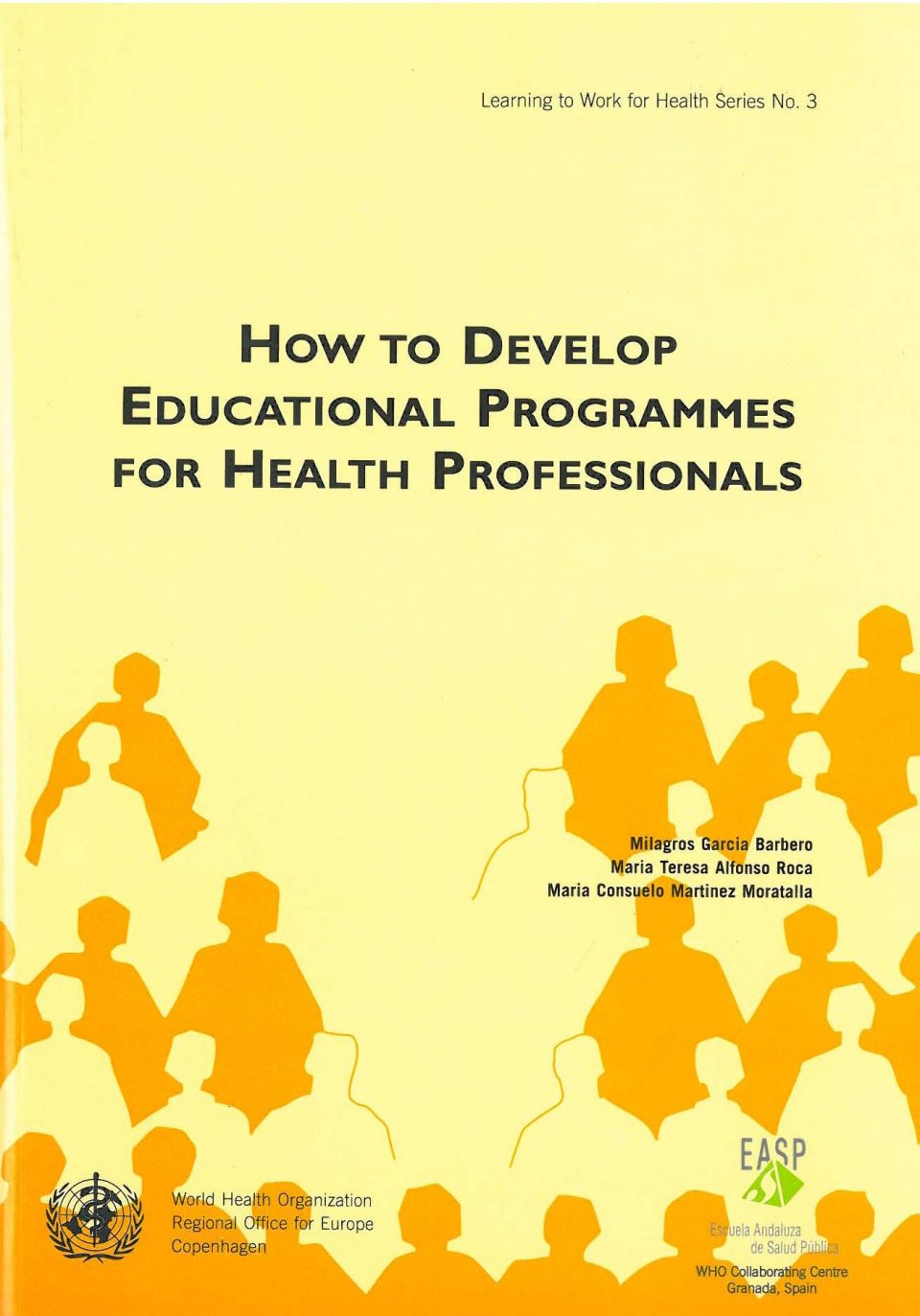


How to develop educational progreammes for health professionals
WHO Learning to Work for Health Series, No. 3. 1998 [wpdm_file id=76]

WHO Learning to Work for Health Series, No. 3. 1998 [wpdm_file id=76]
Although the criteria that support reimbursement decisions for medicines are often set by legislation, as is the case in Spain, in many cases neither the definition nor the measurement methods for these criteria are provided. Our goal was to elicit the views of a large sample of Spanish technical specialists on how to evaluate each…
Background What constitutes innovation in health technologies can be defined and measured in a number of ways and it has been widely researched and published about. However, while many countries mention it as a criterion for pricing or reimbursement of health technologies, countries differ widely in how they define and operationalise it. Methods We performed…
Background. Organized screening programs often rely on written materials to inform the public. In the United Kingdom, women invited for cervical cancer screening receive a leaflet from the National Health Service (NHS) to support screening decisions. However, information about screening may be too complex for people to understand, potentially hindering informed decision making. Objectives. We…
Purpose The numerical format in which risks are communicated can affect risk comprehension and perceptions of medical professionals. We investigated what numerical formats are used to report absolute risks in empirical articles, estimated the frequency of biasing formats and rated the quality of figures used to display the risks. Design Descriptive study of reporting practices.…
Background The aims of this research were to provide a better understanding of the specific evidence needs for assessment of clinical and cost-effectiveness of cell and gene therapies, and to explore the extent that the relevant categories of evidence are considered in health technology assessment (HTA) processes. Methods A targeted literature review was conducted to…
Background Psychological distress and lack of family support may explain the mental health problems that are consistently found in young unaccompanied refugees in Western countries. Given the strong relationship between poor mental health and alcohol misuse, this study investigated hospital admissions due to alcohol related disorders among accompanied and unaccompanied young refugees who settled in…
Background Environmental factors are believed to account for a substantial burden of type 2 diabetes mellitus (T2DM). Non-persistent environmental pollutants (npEPs) are a group of widely-used chemicals identified as endocrine/metabolic disrupting chemicals and obesogens. The aim of this study was to analyse the potential associations of serum levels of three groups of npEPs with the…
Aims Dicarbonyl compounds such as methylglyoxal (MGO), glyoxal (GO), and 3-deoxyglucosone (3-DG) are present in numerous foods. They are pro-inflammatory and pro-oxidative, but their potential role in cardiovascular disease (CVD) development has been scarcely studied. We explored associations between dietary dicarbonyls with fatal and non-fatal CVD. Methods and results We conducted a case-cohort analysis based…
Purpose Dicarbonyls are reactive precursors of advanced glycation end-products. They are formed during food processing, and endogenously in humans during glycolysis and lipid peroxidation. Higher plasma dicarbonyls, particularly methylglyoxal (MGO), promote insulin resistance and type 2 diabetes, but the association between dietary dicarbonyls intake and type 2 diabetes is unknown. This study examined the associations…