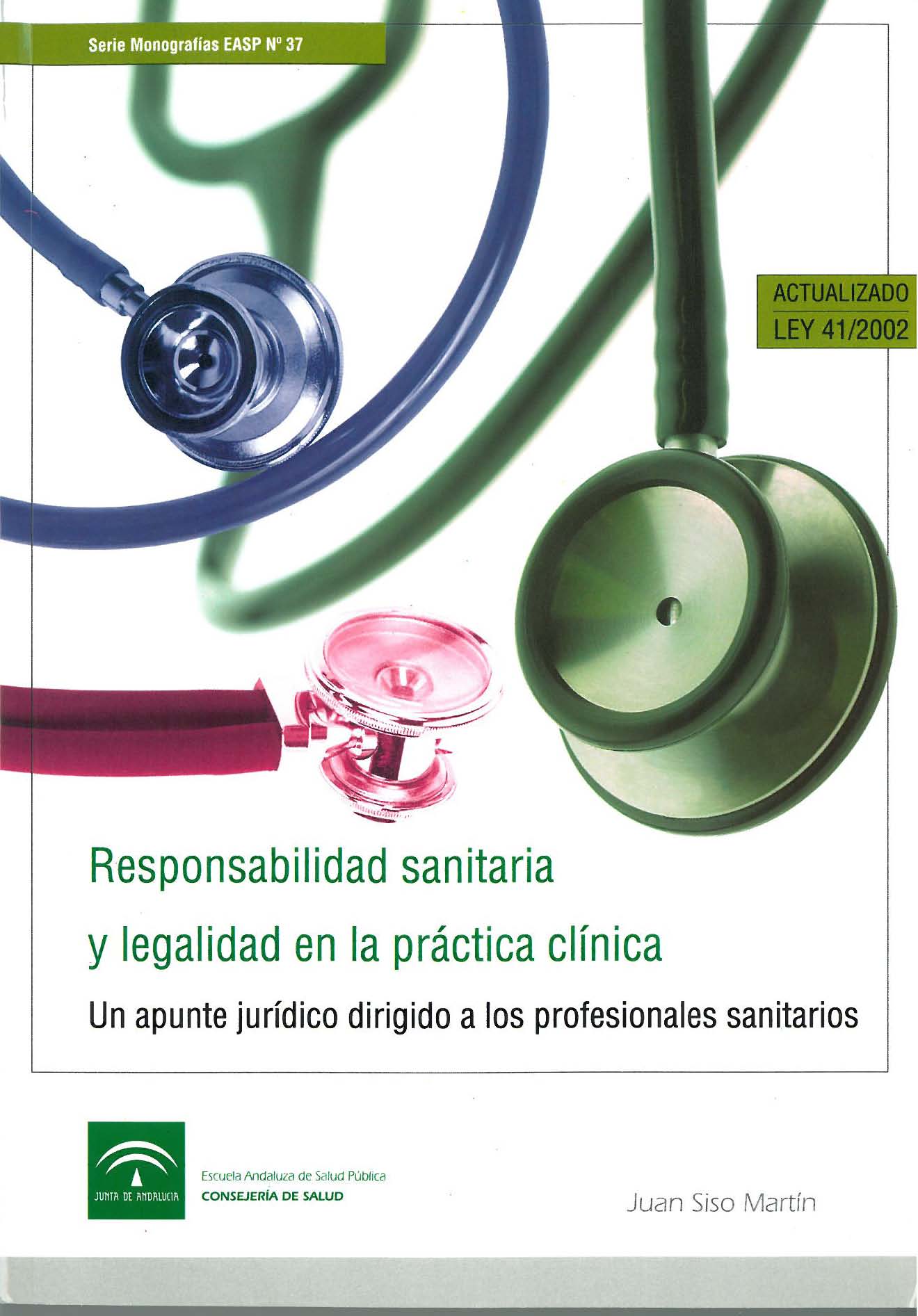
Responsabilidad sanitaria y legalidad en la práctica clínica
Manual de 2002 sobre responsabilidad sanitaria y legalidad en la práctica médica, con carácter eminentemente práctico. [wpdm_file id=95]


Manual de 2002 sobre responsabilidad sanitaria y legalidad en la práctica médica, con carácter eminentemente práctico. [wpdm_file id=95]
Introducción: La pandemia de la COVID-19 ha generado nuevas barreras a la acción comunitaria en salud, pero también ha potenciado el desarrollo de iniciativas ciudadanas para responder colectivamente a la crisis social y sanitaria. En este contexto se crea el Observatorio de Salud Comunitaria y COVID-19 (OBSCOMCOVID), un espacio en el que personas vinculadas a…
Background: Differentiated thyroid carcinoma (DTC) is occurring three times more frequently in females than in males. However, the underlying biological mechanisms driving this discrepancy remain poorly understood. To investigate the causal role of sex hormones and reproductive factors in the risk of DTC, we implemented a two-sample Mendelian randomization (MR) analysis. Methods: We utilized genome-wide…
Background Reproductive events are associated with important physiologic changes, yet little is known about how reproductive factors influence long-term health in women. Our objective was to assess the relation of reproductive characteristics with all-cause and cause-specific mortality risk. Methods The analysis was performed within the European Investigation into Cancer and Nutrition prospective cohort study, which…
BACKGROUND: Reproductive factors influence the risk of developing epithelial ovarian cancer (EOC), but little is known about their association with survival. We tested whether prediagnostic reproductive factors influenced EOC-specific survival among 1025 invasive EOC cases identified in the European Prospective Investigation into Cancer and Nutrition (EPIC) study, which included 521 330 total participants (approximately 370 000 women)…
Background: Except for a documented increase in osteoprotegerin (OPG) concentrations with older age, data on determinants of soluble Receptor Activator of Nuclear Factor κB (sRANKL) and OPG concentrations in women are limited. We evaluated reproductive and lifestyle factors as potential sources of variation in circulating sRANKL and OPG concentrations in pre- and postmenopausal women. Methods:…
Background Renal cell carcinoma (RCC) is twice as common among men compared with women, and hormonal factors have been suggested to partially explain this difference. There is currently little evidence on the roles of reproductive and hormonal risk factors in RCC aetiology. Materials & Methods We investigated associations of age at menarche and age at…
OBJECTIVE There is sparse evidence for the association of suitable food substitutions for red and processed meat on the risk of type 2 diabetes. We modeled the association between replacing red and processed meat with other protein sources and the risk of type 2 diabetes and estimated its population impact. RESEARCH DESIGN AND METHODS The European Prospective…
Objetivo Conocer las repercusiones del confinamiento por la pandemia de COVID-19 en los autocuidados de personas con enfermedades crónicas y en su salud percibida, e identificar factores para el manejo y la gestión de su enfermedad en situaciones de emergencia. Método Estudio cualitativo realizado en marzo-abril de 2020, durante el confinamiento por la pandemia de…
Growing evidence suggests that chronic exposure to pesticides may cause adverse effects on the health of the exposed population leading to organ-specific toxicity, including kidney damage. Traditional markers used to assess renal function (glomerular filtration rate (GFR), and serum creatinine and cystatin C –Cys-C–) are inadequate to evaluate a potential subclinical renal impairment linked to…